
This series began with a question: Where can I stop being so hard on myself? In Giving Ourselves Compassion, we explored what it means to meet ourselves with a little more kindness when life gets difficult.
Today, we’re exploring another gift we can give ourselves.
Forgiveness.
For me, forgiveness begins with myself. Not because I have to forgive myself before I can forgive someone else, but because the understanding I develop toward myself can become available to extend to others.
I see a distinction between compassion and forgiveness. Compassion is something I practice in the present moment, when I’m struggling or when life gets lifey. Forgiveness, for me, often involves looking backward, sometimes decades ago, to the person I was when I thought I knew everything and understood very little.
Can I stop punishing myself for what I didn’t know, didn’t understand, or didn’t have the capacity to do differently?
For forty years, I drank alcohol. For four years, I used crystal meth. I had sex with a lot of men. A lot. I spent money looking for happiness and validation. I told lies, canceled plans, spread gossip, and made choices I still sometimes regret.
And for years, I judged myself for much of it.
But I’ve come to recognize an important distinction, particularly when it comes to my sexual history.
Was having sex with all those men something that required forgiveness?
Or was it the judgments I made about my sexual history?
For decades, I was looking outside myself for love and validation through sex, spending, drinking, and relationships. Underneath so many of those experiences was a question I didn’t even realize I was asking.
Will you love me? Will you love me? Will you love me?
I wasn’t emotionally available to give or receive the love I was searching for. I didn’t understand the trauma influencing my behavior, and I didn’t recognize how much of my worth I had placed in the hands of others.
Looking back, I added another layer of suffering by judging the man who had lived those years. I told myself I’d wasted my time, my money, and my life. I carried shame about my choices and regret about who I believed I should have been.
I thought I needed to forgive myself. So I tried.
But telling myself I forgive myself never worked. It felt performative. I was trying to make forgiveness happen while still believing the stories that kept me suffering.
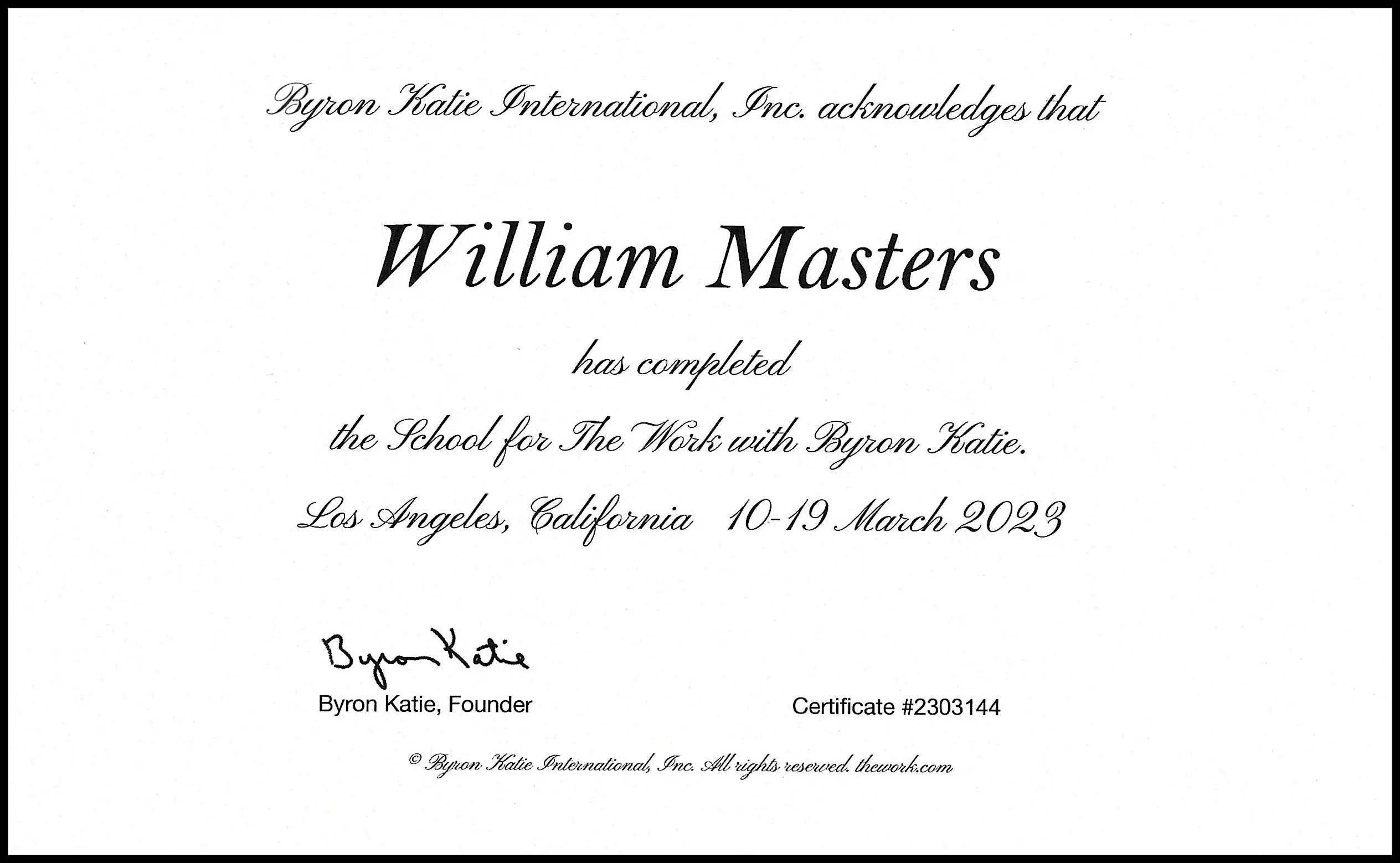
Through The Work of Byron Katie, my own practice of OTFE (One Thought Fully Explored), and two years of deep EMDR therapy, I began to understand myself in a way I hadn’t before. Inquiry didn’t ask me to forgive myself. It asked me to question what I believed about my past, my choices, and the person I thought I was.
Notice and question. Question and notice.
As I began to understand the loneliness, trauma, and longing for validation that had influenced so much of my life, my relationship with the man I used to be began to change.
Understanding didn’t erase the consequences of my choices or mean everything I did was okay. But I began to see myself as a human being rather than a collection of mistakes.
My thinking softened. My judgments softened. And forgiveness began to show up without my having to proclaim it or demand it. That doesn’t mean regret has disappeared. Sometimes the old stories still come knocking.
I wasted so much time. I wasted so much money. I wasted my life.
And sometimes I feel sad.
I can appreciate how my experiences contributed to the person I am today while still wishing some things had been different. Regret reminds me that my values have changed.
But when those painful stories return, I have another opportunity for inquiry. And I’ve noticed they don’t hurt quite as much as they once did. I can sit beside them, question the judgments, and allow myself to feel whatever comes up.
I feel sad for the man I used to be, but I don’t judge him as harshly as I once did.
Last week, in Giving Others the Benefit of the Doubt, I wrote that recognizing someone’s humanity doesn’t require me to forgive them.
The same applies to ourselves.
There is no requirement to forgive.
We don’t have to force forgiveness, excuse harmful behavior, or pretend our choices had no consequences. We can begin by understanding ourselves, and sometimes forgiveness arrives naturally as our thinking softens.
And I’ve discovered that the understanding I extend toward myself makes it easier to recognize the humanity of others. I can acknowledge their behavior without reducing them to it, just as I’ve learned to do for myself.
It’s all about me. Not because everything is my fault, but because my relationship with my thinking is where I can begin to make a difference.
For years, I believed forgiveness was something I needed to accomplish before I could make peace with my past.
What I’ve discovered is that peace began to arrive when I stopped demanding forgiveness and started understanding myself.
And forgiveness followed.
This Week’s Invitation
This week, I’m inviting you to explore something from your past that you still hold against yourself.
It might be a decision you regret, someone you hurt, something you said, an opportunity you believe you wasted, or a time when you wish you’d behaved differently.
Start small. You don’t have to begin with the most painful experience of your life.
Notice what happens when you remember that moment. What images does your mind bring forward? What feelings arise? And most importantly, what are you telling yourself about the person you were?
Perhaps the story is I should have known better. I was selfish. I ruined everything. I wasted so much of my life.
Rather than immediately trying to forgive yourself or replace those thoughts with something more positive, become curious.
What did I believe at the time?
What was I afraid of, hoping for, or trying to avoid?
What did I understand about myself and my circumstances then, and what do I understand differently today?
Can I acknowledge the consequences of my choices without turning those choices into an identity about who I am?
And when the familiar judgment appears, can I notice it without judging myself for still having it?
You don’t have to excuse what happened. You don’t have to convince yourself that you did the best you could. And you certainly don’t have to forgive yourself by the end of this exercise.
Just allow yourself to see a little more of the person you were.
Notice the sadness if it’s there. Question the judgment if you’re willing.
And see whether anything begins to soften.
Forgiveness isn’t something we owe ourselves or anyone else. It isn’t a deadline, a declaration, or another task we have to complete to become better people.
Sometimes it arrives through understanding. Sometimes it takes longer. And sometimes we’re simply not ready.
We can still practice compassion toward ourselves in the meantime.
The past doesn’t change because we forgive ourselves. But our relationship with the past can change as we begin to understand it differently.
And perhaps that’s one of the greatest gifts we can give ourselves.
The freedom to stop punishing the person we were and begin caring for the person we are.
The Giving Season Is Better When We Share It
If this reflection spoke to you, consider sharing it with someone who may still be carrying the weight of their past.
Not because they need to forgive themselves or do anything differently, but because sometimes we all need a reminder that our mistakes, regrets, and painful experiences don’t have to become the whole story of who we are.
Understanding, kindness, and compassion are gifts worth passing along.