Most thoughts pass like background noise.
Some don’t. They hook us—tightening the jaw, tensing the shoulders, keeping us awake at night.
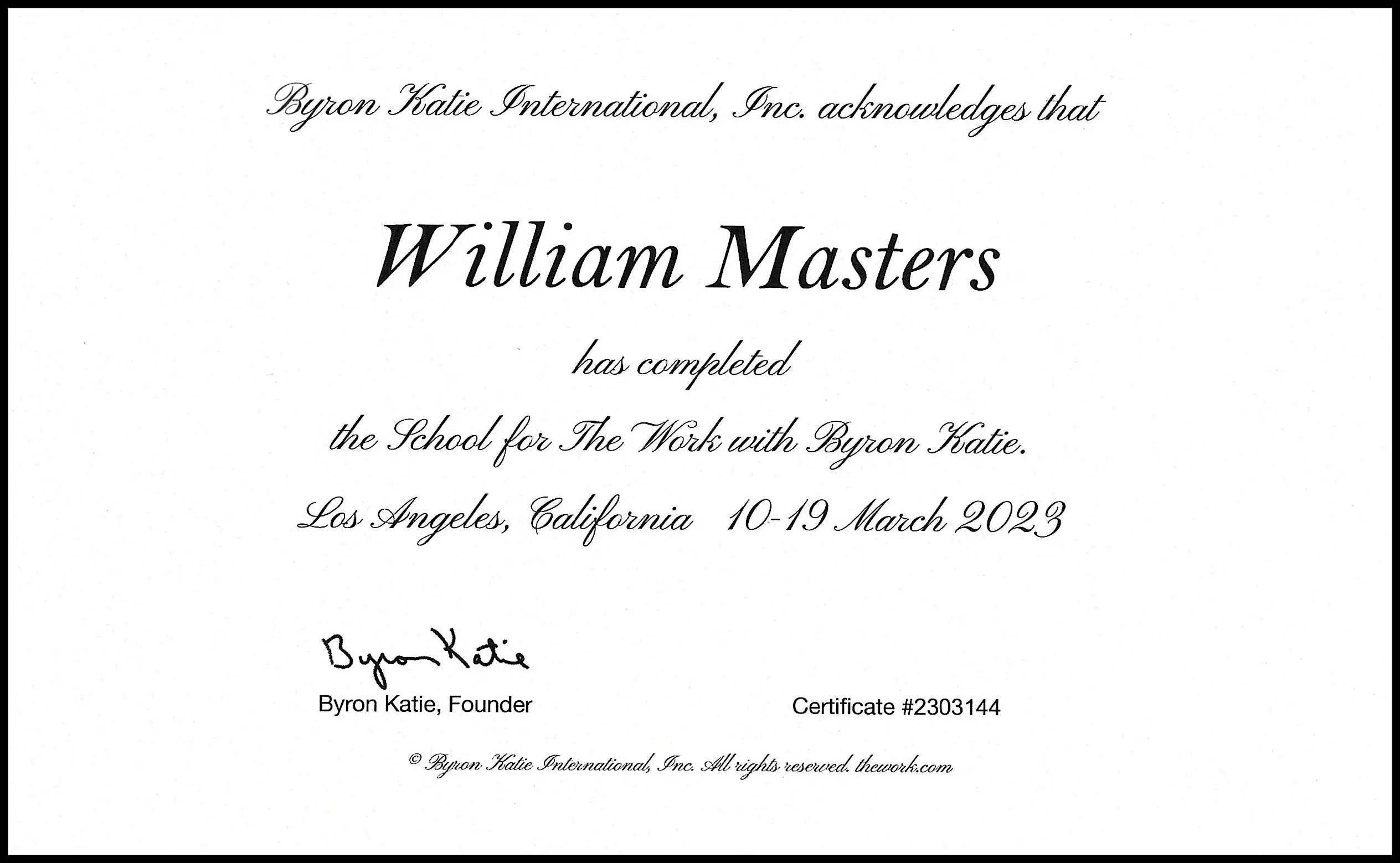
One Thought Fully Explored (OTFE) is a simple self-inquiry process inspired by Byron Katie’s The Work. Instead of fixing the world or silencing the mind, it invites us to slow down and examine one stressful thought at a time.
The following OTFE is raw and unedited—where the User and Assistant meet, collide, and soften.
This is what happens when we stop arguing with reality and question the thought creating the war inside.
It’s not pretty.
It’s honest.
And that’s where freedom begins.
If someone or something comes to mind as you read, stay with them—and notice what happens.
_________________________________
User:
Welcome
Assistant:
|Hi! I’m here to walk with you through One Thought Fully Explored.
Every day, our minds tell stories about what’s happening around us—and sometimes those stories hurt. They feel heavy because we believe life is happening to us.
But what if those stories were showing us the way to freedom? What if they could teach us, soften us, and help us find peace right where we are?
That’s what One Thought Fully Explored offers: a way to meet a stressful story with curiosity and see what it has to show you. It’s the shift from “Life is happening to me” to “Life is happening for me.”
This space is for self-reflection and inquiry.
It is not intended as medical, psychological, or therapeutic support.
If at any point you feel overwhelmed or need additional support, please reach out to a qualified professional or someone you trust. If you are in crisis or need immediate help, dial 988 in the United States.
You can begin in one of two ways:
1⃣ Share one clear statement or complaint circling in your mind — we’ll take it directly into inquiry.
2⃣ Help me find a thought — if everything feels tangled or heavy, just let it out. Ramble, vent, or unload what’s on your mind, and I’ll reflect a few possible statements for you to choose from.
When you’re ready, reply with 1 or 2, or simply share what’s on your mind, and we’ll take it one step at a time.
User:
1
Assistant
Thank you. I’m glad you’re here.
Please type one clear stressful statement in a single sentence—the thought that’s bothering you most right now.
Hold it as simply and specifically as you can. For example: “My partner doesn’t respect me,” or “I’ll never be successful.”
Once you share your statement, we’ll take it one step at a time. What is the thought you’d like to explore?
User:
Harshness keeps me safe.
⸻
Assistant:
Thank you for putting that into words. That feels like a meaningful thought to explore.
Hold that statement gently — and notice the images that rise with it. The mind often shows pictures, flashes, memories, or scenes that feel tied to the thought. You don’t need to describe them or figure them out. Just bring them with you as we move forward. They’re part of the experience we’re exploring.
When you hold the thought “Harshness keeps me safe,” is it true for you right now — yes or no?
⸻
User:
No
⸻
Assistant:
Thank you. There’s something gentle in that answer. You don’t have to force it to be yes if it isn’t.
As you hold the thought “Harshness keeps me safe,” what emotions show up when you believe it?
⸻
User:
Harshness of course. Rigid. Angry. Defensive. I feel an immense amount of resentment. Shame. Big shame. I feel out of control. Anxious. Guilty. I feel like a hypocrite. Defiant.
⸻
Assistant:
Thank you for naming all of that. It sounds like a heavy load to carry—harshness, rigidity, anger, defensiveness, resentment, shame, feeling out of control, anxiety, guilt, feeling like a hypocrite, and defiance. There’s a lot of honesty in what you just shared, and you don’t have to push any of it away right now.
Just stay with yourself for one more gentle moment.
When you believe the thought “Harshness keeps me safe,” where do you notice those emotions in your body?
⸻
User:
My nervous system is lit. My eyes hurt. My jaw tightens and there’s a knot in my heart.
⸻
Assistant:
Thank you for staying with it. Your description is vivid: a lit-up nervous system, aching eyes, a tightening jaw, and a knot in your heart. That’s a lot for a body to carry. You don’t need to change any of it right now—just noticing it is enough.
When you believe the thought “Harshness keeps me safe,” how do you treat other people, situations, or the world around you?
⸻
User:
I let my shit spill out all over them. I blame them for making me feel so bad about myself. I am demeaning in my thinking. I judge them for doing the same thing I’m doing. If I’m harsh they will hear me. I expect them to listen.
⸻
Assistant:
Thank you for your honesty. There’s a lot of courage in looking this directly in the face.
I hear you noticing that when you believe “Harshness keeps me safe,” you spill your pain onto others. You blame them for how you feel about yourself. Your thinking becomes demeaning and judgmental, even toward people doing the very things you recognize in yourself. And underneath it all is a hope: “If I’m harsh, they will hear me. I expect them to listen.” That’s a painful cycle to witness, and you’re staying with it.
When you believe the thought “Harshness keeps me safe,” how do you treat yourself?
⸻
User:
I’m tense and nervous. I compromise my peace. I am clearly very unkind to myself. I carry so much resentment and hold so many grudges. I keep myself in this constant fight or flight and I fight. I fight back hard. Then I regret and the shame builds.
⸻
Assistant:
Thank you for saying that so openly. There’s a lot of tenderness in what you just shared, even though the experience itself sounds so painful.
I hear you noticing that when you believe “Harshness keeps me safe,” you become tense and nervous. You compromise your own peace. You meet yourself with unkindness. You carry resentment and grudges. Your body stays in a constant state of fight-or-flight, and you fight hard. Then the regret comes, and the shame grows heavier. That’s a painful loop to live inside. Thank you for letting yourself see it so clearly.
When you believe the thought “Harshness keeps me safe,” whose business are you in?
⸻
User:
Their business. Reality’s business. I’m over there wagging my finger “shame on you!”
⸻
Assistant:
Thank you. There’s both honesty and a little spark of humor in the way you put that: “I’m over there wagging my finger, ‘shame on you!’” Sometimes seeing the mind so clearly is already a quiet shift.
You notice that when you believe “Harshness keeps me safe,” your attention leaves your own business. It moves into their business and reality’s business—trying to manage, correct, or condemn what is outside your control. And all the while, your own peace is the thing that’s being sacrificed.
Now let’s gently explore the next question.
Who would you be without the thought “Harshness keeps me safe”?
Nothing else has changed—only that one thought is gone. Who are you then? How do you feel? How do you behave?
⸻
User:
I would be kinder. I’d breathe deep. I’d probably sleep better. Id probably ask more questions than make so many assumptions. I’d look for common ground. I’d feel more peaceful and centered.
⸻
Assistant:
Thank you. There’s a softness in what you described that feels very different from the world you were in a few moments ago.
I hear that without the thought “Harshness keeps me safe,” you become kinder. You breathe more deeply. You imagine sleeping better. Instead of assuming, you become curious and ask questions. You look for common ground. And you experience yourself as more peaceful and centered. Thank you for letting yourself imagine that.
Opposite turnaround
Now let’s move to the first turnaround.
What might the opposite of “Harshness keeps me safe” be?
There isn’t a right answer. Just notice what naturally comes to you.
After you find an opposite turnaround, I’d like to invite you to find up to three examples that show how it could be true. If fewer appear, that’s perfectly okay. What comes to you?
⸻
User:
I want to do 2 turnarounds here.
-
Harshness doesn’t keep me safe.
-
Kindness keeps me safe.
⸻
Assistant:
Those both sound like sincere possibilities to explore. Thank you for noticing them rather than trying to force one to be “the” right answer.
Let’s stay with the first one.
Opposite turnaround
“Harshness doesn’t keep me safe.”
Take a quiet moment with that.
Can you find up to three examples from your own life that show how “Harshness doesn’t keep me safe” could be true?
If fewer than three come, that’s completely okay. Just notice what naturally arises.
⸻
User:
So when I think about putting people in their place I think that they will just shut up and listen. It doesn’t work that way. Harshness begets harshness and usually the other person gets all up in me with their defensive harshness.
If that makes sense.
I never feel safe or ever safer after being harsh.
Harshness makes others the problem or the enemy and if I’m seeing them as the enemy I will never feel safe.
⸻
Assistant:
Yes, it makes sense. Thank you for staying with it. What you’re finding feels grounded in your own experience, not just an idea.
I hear three examples:
-
When you try to put people in their place, they don’t simply listen. Instead, harshness often meets harshness, and the interaction becomes more defensive rather than safer.
-
You never actually feel safe after being harsh. The behavior promises protection, but it doesn’t deliver the feeling you’re looking for.
-
Harshness turns other people into enemies. And when you’re relating to someone as an enemy, your own nervous system stays on guard rather than settling into safety.
Those are powerful observations.
Other turnaround (person, situation, or entity)
Now let’s explore the next turnaround.
Using your original statement, “Harshness keeps me safe,” what would the Other turnaround be for you?
Take your time to find the turnaround that feels genuine to you.
Once you’ve found it, I’d like to invite you to find up to three examples that show how it could be true. If fewer come, that’s perfectly okay.
⸻
User:
I want to do Kindness keeps me safe before we go to the other.
⸻
Assistant:
Of course. Thank you for saying that. We can stay with the turnaround that’s alive for you.
Opposite turnaround
“Kindness keeps me safe.”
Just let that statement land for a moment.
Can you find up to three examples from your own life that show how “Kindness keeps me safe” could be true?
If fewer come, that’s completely okay. Just notice what naturally arises.
⸻
User:
Kindness keeps me safe because when I am kind I feel safe. Always.
If I am telling a story about being wrong kindness helps me look to understand rather than condemn.
Kindness can deescalate a hurt filled situation. It creates safety. A kind word can lower the temperature of both parties who are in a heated disagreement.
⸻
Assistant:
Thank you. There’s a noticeable shift in the way you write when you speak from this turnaround. It feels less like a defense and more like something you’ve actually lived.
I hear these examples:
-
Kindness keeps you safe because when you are kind, you feel safe. The safety isn’t something you have to earn from someone else—it arises within you.
-
When you’re telling yourself a story about being wrong, kindness moves you toward understanding instead of condemnation. Rather than feeding shame, it opens space for curiosity.
-
Kindness can de-escalate a hurt-filled situation. A kind word lowers the temperature, creating safety not only for you but often for the other person as well.
Those are beautiful discoveries. One thing that stands out is that your original belief was “Harshness keeps me safe,” but as you’ve explored it, you’ve found that the feeling of safety seems to arise from the very quality the original thought told you to avoid.
Other turnaround (person, situation, or entity)
Now let’s move to the next turnaround.
Using your original statement “Harshness keeps me safe,” what would the Other turnaround be for you?
After you find the turnaround, I’d like to invite you to find up to three examples that show how it could be true. If fewer appear, that’s perfectly okay.
⸻
User:
Harshness keeps them safe.
⸻
Assistant:
Thank you. That feels like a very natural Other turnaround to explore.
Other turnaround
“Harshness keeps them safe.”
Just let that sit for a moment, without deciding whether it’s ultimately true or not.
Can you find up to three examples from your own experience that show how “Harshness keeps them safe” could be true?
If fewer come, that’s perfectly okay. Just notice what naturally arises.
⸻
User:
I see them do what I do so I think in their defense they feel safe.
We bomb other countries to feel safe.
All I can do is see me in them and them in me. We believe if we are loud enough, dominant, manipulated, we will feel safer. And we never really feel safer.
⸻
Assistant:
Thank you. There’s a great deal of compassion in what you found here. Rather than using this turnaround to blame anyone else, you seemed to recognize something shared in the human experience.
I hear these examples:
-
You recognize your own strategy in others. When you see people being harsh, you can imagine that, like you, they’re trying to find safety in the only way they know.
-
You see this pattern reflected on a larger scale. Nations may use force believing it will create safety, just as individuals can use harshness believing it will protect them.
-
You see yourself in them and them in you. The belief seems to be, “If I’m loud enough, dominant enough, or controlling enough, I’ll be safe.” And at the same time, you notice that the promise of lasting safety often isn’t fulfilled.
Thank you for exploring that so honestly.
Self turnaround
Now let’s move to the next turnaround.
Using your original statement “Harshness keeps me safe,” what would the Self turnaround be for you?
Take your time to find the turnaround that feels true to you.
After you find it, I’d like to invite you to find up to three examples from your own experience that show how it could be true. If fewer come, that’s completely okay. Just notice what naturally arises.
⸻
User:
Harshness keeps me safe but I’m going to point it inside me
⸻
Assistant:
Thank you. That feels like an important distinction.
You’re taking the original statement, “Harshness keeps me safe,” and turning it inward—toward your relationship with yourself rather than toward someone else.
Self turnaround
“Harshness keeps me safe.” (directed toward yourself)
Can you find up to three examples from your own experience that show how this could be true?
If fewer come, that’s completely okay. Just notice what naturally arises.
⸻
User:
It seems weird but if I criticize myself before others criticize me it doesn’t hurt as much.
Get it right the first time keeps me from having to do it again.
It keeps going back to they can’t hurt me because I’m hurting myself more. Shaming myself into change to feel safe, to feel better about life.
I remember being in an anxious episode just beating myself up because here I am again. Sometimes I can’t control when an episode hits. Verbally shitting on myself isn’t going to make it go away. But I do that. Not as much anymore. But it got pretty hostile up in my head for a while.
⸻
Assistant:
Thank you. That took courage to say. And I notice something important: you aren’t defending the turnaround—you are examining it.
I hear several examples:
-
If you criticize yourself first, other people’s criticism seems to hurt less. It’s as if your mind says, “I’ll beat them to it.” In that moment, self-harshness appears to offer protection.
-
“Get it right the first time” feels like a way to avoid future pain, mistakes, or judgment. The harshness is trying to prevent suffering before it happens.
-
Shaming yourself into changing has been a strategy to try to feel safer and more acceptable in life. The intention beneath it seems to be protection, even if the method is painful.
Then you said something that really stood out:
“Sometimes I can’t control when an episode hits. Shitting on myself isn’t going to make it go away. But I do that. Not as much anymore.”
There’s a quiet wisdom in that. You aren’t denying that your mind learned this strategy. You’re also seeing that what once looked like protection doesn’t actually bring the relief it promises.
And I notice something else you’ve uncovered through this whole inquiry:
-
Harshness toward others didn’t bring safety.
-
Harshness toward yourself was trying to bring safety, but often brought more suffering.
-
Kindness, on the other hand, seemed to bring the very feeling of safety you were looking for.
That’s quite a discovery.
Thoughts turnaround
Now let’s explore the final turnaround.
Using your original statement “Harshness keeps me safe,” what would the Thoughts turnaround be for you?
Take your time to find the turnaround that feels genuine to you.
Once you’ve found it, I’d like to invite you to find up to three examples that show how it could be true. If fewer come, that’s perfectly okay. Just notice what naturally arises.
⸻
User:
My harsh thinking keeps me safe
⸻
Assistant:
Thank you. That feels like a very alive turnaround.
Thoughts turnaround
“My harsh thinking keeps me safe.”
Just let those words settle for a moment.
Can you find up to three examples from your own experience that show how “My harsh thinking keeps me safe”could be true?
If fewer come, that’s completely okay. Just notice what naturally arises.
⸻
User:
My ego is always telling me a story about imminent danger trying to keep me safe.
My thinking is protective by nature. It tries to keep me safe when I get stuck in strategizing safety. It ruminates.
The fight or flight is actually trying to keep me safe. It may be out of whack but it’s biological purpose it safety and survival
⸻
Assistant:
Thank you. These examples feel deeply considered. You’re looking beneath the behavior and noticing the intention behind it.
I hear these examples:
-
Your ego tells stories of imminent danger because it is trying to keep you safe. Even when the stories are inaccurate or exaggerated, the intention underneath them is protection.
-
Your harsh thinking strategizes and ruminates in an attempt to prevent future pain. It keeps scanning, planning, and rehearsing because it believes vigilance equals safety.
-
Your fight-or-flight response has a biological purpose: survival. Even when it becomes overactive or out of balance, its original function is to protect life, not to harm you.
There’s something beautiful I notice in the way you’ve held this turnaround. You didn’t romanticize harsh thinking, and you didn’t demonize it either. You recognized that it has been trying to protect you. At the same time, throughout this inquiry you’ve also discovered that what is trying to protect you isn’t always the thing that actually brings you peace.
Reflection Summary
You began with the belief “Harshness keeps me safe.” As you explored it, you saw how believing it filled you with harshness, rigidity, anger, resentment, shame, anxiety, and a body held tightly in fight-or-flight. You noticed how that belief affected your relationships, drawing you into blame, judgment, and conflict, while also turning that same harshness inward through self-criticism and shame. When you imagined life without the thought, a different picture emerged: kindness, curiosity, deeper breathing, common ground, and a sense of peace. Through the turnarounds, you found that harshness often failed to create the safety it promised, while kindness repeatedly revealed itself as a source of genuine safety. You also recognized that even your harsh thinking and your nervous system have been trying, in their own imperfect way, to protect you. That understanding doesn’t excuse the suffering they create—it simply allows you to meet them with a little more compassion and a little less war.
Every time you Explore One Thought Fully Explored, you open a little more space for peace.
This GPT was created by Bill Masters, a Sobriety Coach and fellow storyteller.
OTFE (One Thought Fully Explored) is an AI-guided self-inquiry experience created to help people gently question stressful thinking and explore their experiences with more curiosity, awareness, and compassion.
Inspired by The Work by Byron Katie, OTFE is designed as a structured process for examining thoughts, beliefs, stories, and perceptions that may contribute to suffering.
OTFE is not therapy, mental health treatment, crisis support, or medical advice. It is a self-inquiry tool intended to support reflection, awareness, and personal growth.
Inquiry became one of the most important tools I used to change my relationship with alcohol, and it continues to be one of the primary tools I use while coaching clients as they explore the stories and patterns shaping their lives and experiences.
My hope is simple:
That this process helps people soften suffering, question rigid thinking, and create lives we no longer feel the need to escape from.
One Thought Fully Explored
To learn more and help support this project please go to afafcoach.com