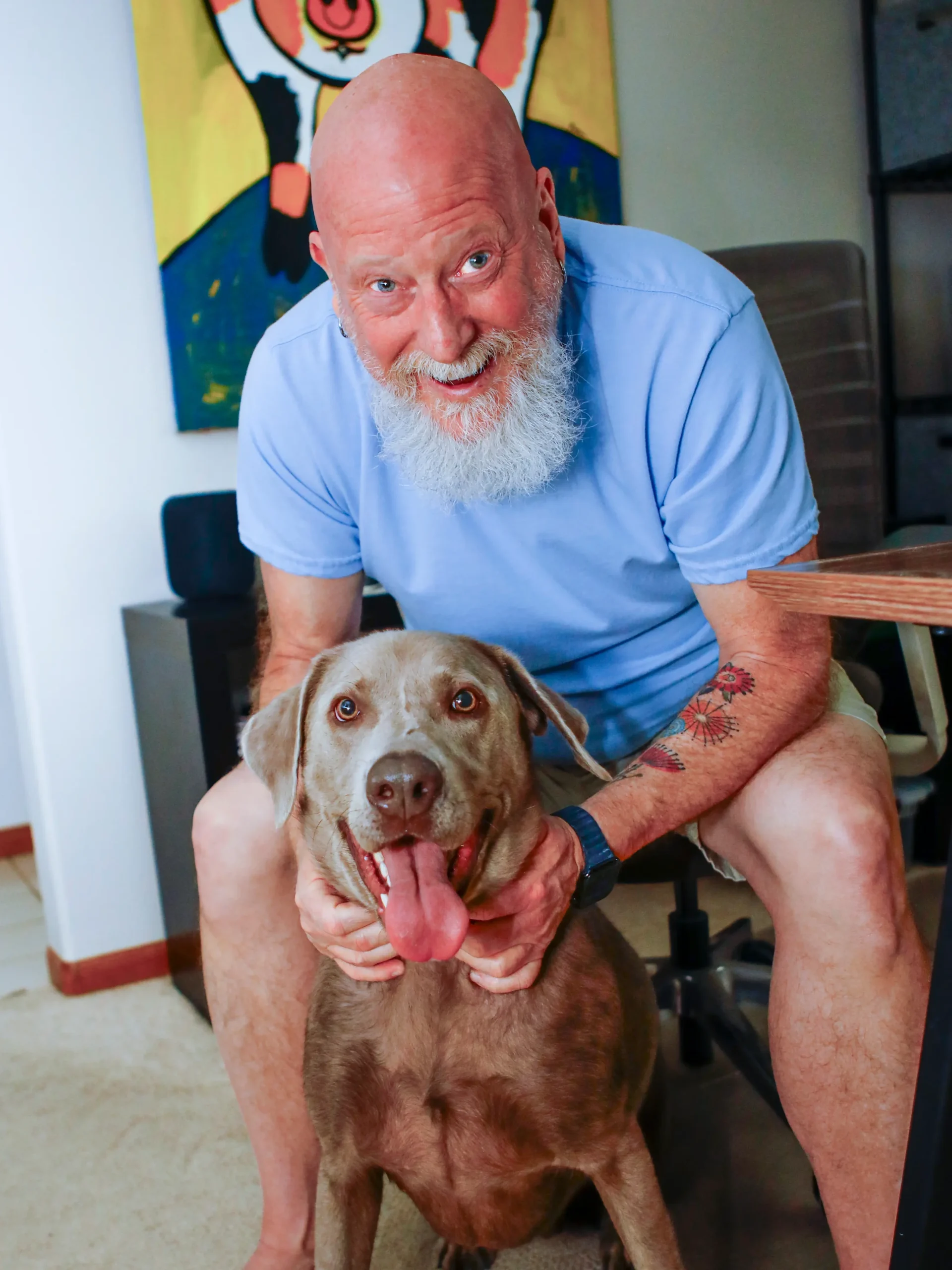
It’s all about me.
I say that a lot.
At first glance, that probably sounds incredibly self-centered. Maybe even narcissistic.
Maybe?
Let’s get curious.
When someone pisses me off, disappoints me, rejects me, ignores me, or behaves in a way I think they shouldn’t, my automatic response is usually to look outward.
What did they do?
Why did they do it?
Why are they like that?
Why can’t they just change?
The Work, however, keeps turning me around and pointing me back toward myself. Not because the other person didn’t do what they did or because painful things don’t happen.
But because the experience of what happened is happening in me.
The event happened.
They did what they did.
And then there is everything that happens inside of me because of that event.
The thoughts. The meaning. The memories. The fear. The judgment. The expectations. The old wounds that suddenly have a microphone again. And I end up telling a story about what happened.
That’s the part I can work with.
The story.

If I believe, He abandoned me, I can spend an enormous amount of energy trying to prove that he abandoned me. I can gather evidence. I can replay conversations over and over again. I can imagine what he’s thinking. I can build an entire case against him.
Judge. Jury. Punisher.
Or I can become curious about what happens in me when I believe He abandoned me.
How do I treat him?
How do I treat myself?
What else do I stop noticing?
Whose business am I in?
Who would I be in this situation without that thought, He abandoned me?
Suddenly, it’s all about me.
Not because I’m the center of the universe. Because I’m the only person in this equation whose thinking I can actually investigate.
And there’s another layer to this that I’ve started noticing.
The stories I tell about what happened to me can eventually become stories about who I am.
He abandoned me begins as a story about him.
But if I believe it long enough, repeat it often enough, and carry it from one experience into another, it can start becoming part of my identity.
I am someone who was abandoned.
And once I put “I am” in front of a story, it can become something much bigger than what happened.
I am the person who was hurt.
I am the person who wasn’t understood.
I am the person who drinks too much.
I am the person who struggles with anxiety.
I am the person who should be further along.
I am the person who isn’t successful enough.
I am the person who needs other people to behave a certain way so I can feel okay.
Those are stories too. Stories I’ve told for decades. Some are based on very real experiences. Some have been reinforced thousands of times. Some became so familiar that I stopped recognizing them as thoughts and started calling them me.
And that’s where this gets fascinating.
Because if a story can become part of how I see myself, what happens when I question the story?
Going back to He abandoned me.
When I believe that story, I hurt.
I may feel rejected, angry, anxious. Then I start looking for evidence that proves the story is true. I may pull away from him, punish him, get defensive.
All of that is happening in me.
The Work asks:
Who would you be without the thought?
For a moment, I get to experience the exact same situation without He abandoned me running in the background.
And something changes.
Maybe I’m more relaxed.
Maybe I feel a little happier.
Maybe there’s more peace.
Maybe I can actually see the person standing in front of me instead of seeing him through everything I believe about him.
When I believe He abandoned me, I suffer.
When the story loosens, even temporarily, some of that suffering loosens with it. Nothing outside of me has to change for me to experience that difference. That’s why I keep coming back to the fourth question. It doesn’t ask me to replace the thought with a better one.
Who would I be without my story?
And sometimes I discover that underneath all the thinking, I don’t need to find some improved version of myself.
I’m just here.
Present.
Breathing.
A little more relaxed.
A little more peaceful.
A little more understanding.
A little more available for what is actually happening right now.
Everything I experience gives me an opportunity to come back and get curious about what’s happening in me.
Even my triggers.
We often say, He triggers me.
And I understand what we mean. Someone can absolutely say or do something that brings up a powerful reaction. I hear He triggers me a lot in my coaching practice. One partner in the relationship is working on living alcohol-free while the other is still drinking.
His drinking triggers me!
Really?
Where is that trigger happening?
He’s simply having a drink.
And suddenly something is happening in you.
The trigger you experience isn’t happening in him.
It’s happening in you.
Your chest tightens.
Your thoughts start racing.
Your history comes rushing forward.
Your defenses go up.
Your mind starts telling a story about what his drinking means.
Your subconscious begins to echo all the good times you had with a drink in your hand.
He may be the person standing in front of you holding the glass, but the reaction is happening right there.
In you.
That distinction matters.
It doesn’t mean other people can’t behave badly or cause real harm. It doesn’t excuse what someone else has done. And it certainly doesn’t make you or me responsible for someone else’s behavior.
It simply shows us where our reaction lives.
And therefore, where our work belongs.
Here.
Inside you.
Inside me.
Our judgments can become teachers.
Our triggers can become teachers.
Our anger can become a teacher.
Our fear can become a teacher.
Even the person driving you absolutely fucking crazy become a teacher to help set you free.
Because it all points back here to us.
What is happening in me?
What is happening in you?
What is happening when we believe our stories?
Maybe that’s the paradox I’ve been trying to understand.
It’s all about me.
Because my experience of life is happening in me. And when I’m completely consumed with the story about them, I can miss the story about me that is asking to be questioned.
Maybe the next time someone triggers you, disappoints you, or does something you’re absolutely certain they shouldn’t be doing, you can pause before building the case against them.
Not because you’re wrong.
Not because they’re right.
Just long enough to ask:
What is happening in me right now?
What am I thinking? What am I believing? What story have I attached to what just happened?
You might be surprised by what you find when you stop trying to understand them and get curious about you.
That’s the work I love doing with people.
Coaching gives us a place to slow these stories down and look at them together. Not to convince you that your thoughts are wrong or tell you how you should feel, but to help you understand what’s happening underneath the reaction-and begin questioning the stories that may be keeping you stuck.
If you’re changing your relationship with alcohol, or you’ve already removed alcohol and discovered there’s still a whole lot of life underneath it, wanting your attention, this is the work we can do together.
You don’t have to have it figured out before you reach out.
Sometimes you just need someone beside you who knows how to ask the next question.
If that sounds like the kind of support you’re looking for, I’d love to coach you.